
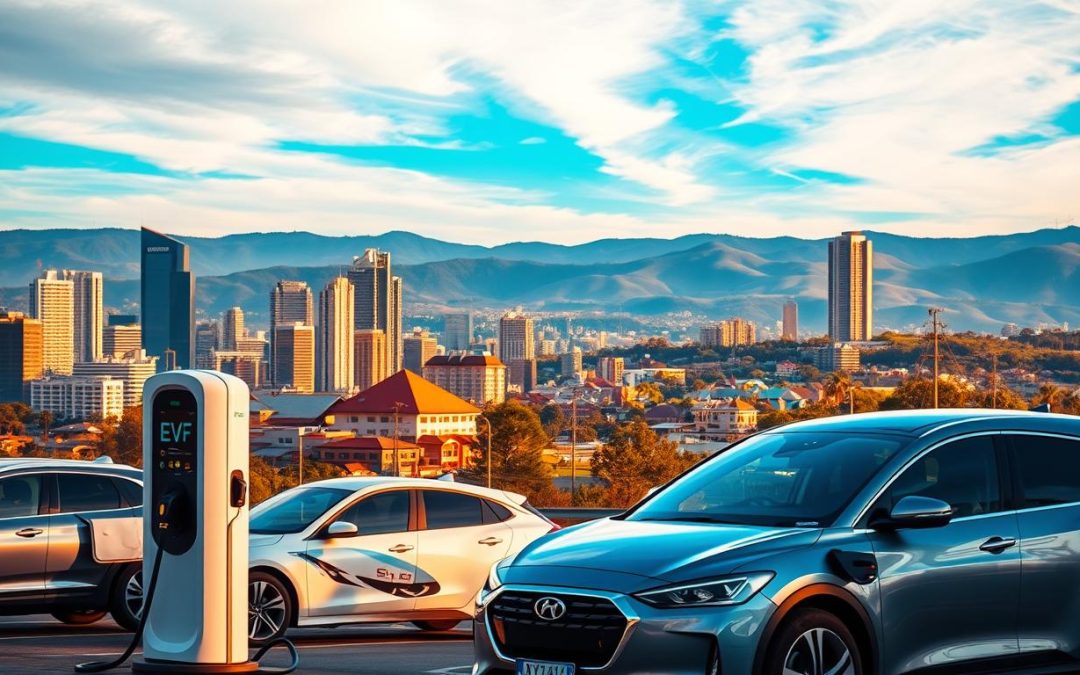
Australia’s energy scene is on the brink of a big change. By 2035, vehicle-to-grid (V2G) tech could offer up to 6 gigawatts of power. This is enough to power nearly 1.2 million homes during peak times. It shows how v2g australia could change energy management across the country.
The growth of vehicle-to-grid technology in Australia is a turning point. The increase in electric vehicles (EVs) brings both challenges and opportunities. With over 1.2 million EVs expected by 2030, their batteries could help renewable energy grids. But, with any technological improvements, there are always going to be hurdles, like high costs and missing rules.
Key Takeaways
- V2G could supply 6 gigawatts of energy by 2035, aiding grid stability.
- Australia’s EV adoption rate is critical to realising V2G’s full vehicle-to-grid technology in Australia.
- Renewable energy integration depends on coordinated policy and investment.
- Current infrastructure struggles to handle widespread EV adoption and V2G systems.
- Consumer awareness and incentives will drive uptake of this technology.
For expert views on v2g australia and how it can help your business, call 1300 207 351. The path to a greener energy future starts with grasping the chances and challenges in this new field.
Introduction to Vehicle-to-Grid (V2G) Technology
Vehicle-to-Grid (V2G) technology turns electric vehicles into energy assets. It lets them send and receive power. This is key for electric vehicle charging and renewable energy integration in Australia’s green future.
Defining V2G and Its Relevance
V2G technology allows electric vehicles to interact dynamically with the power grid. Unlike traditional one-way charging, V2G employs bidirectional charging, meaning that electricity can flow both into and out of the EV battery.
This process transforms EVs into mobile energy storage units, helping to balance power supply and demand. V2G lets electric vehicles both use and give back energy. They store extra energy from the sun or wind during the day. Then, they send it back when we need it most.
This helps balance energy use and cuts down on fossil fuels. For example, solar energy can charge EVs. Later, they can power homes or the grid at night.
How Vehicle-to-Grid Integration Works
- Charging Mode: The EV draws energy from the grid to charge its battery as usual.
- Discharging Mode: When the grid requires additional power, the V2G system allows energy from the EV battery to be fed back into the grid.
- Smart Management: Advanced software and smart meters monitor electricity demand, battery levels, and grid conditions to ensure optimal energy distribution.
- Economic Incentives: EV owners can sell excess energy during peak demand periods, potentially lowering their overall energy costs. EV batteries store energy from solar panels or wind turbines.
Current State of V2G Implementation in Australia
Australia is moving forward with V2G technology through pilot projects and partnerships. Utilities are testing grid flexibility to balance energy supply and demand. For example, Tesla’s Powerwall and Powerpack systems are being tested with V2G software.
These trials show how electric vehicles can act as mobile batteries. They can send energy back to the grid during outages or peak hours.

Work is underway to upgrade infrastructure for two-way energy flow. Charging stations in cities like Melbourne and Sydney now have smart meters. This grid flexibility helps manage voltage and reduce strain on old networks.
Improvements in lithium-ion batteries are also key for stabilising local grids.
- Trials in Queensland use EVs to power remote communities during blackouts
- Partnerships between car manufacturers and energy retailers are expanding
- Government grants incentivise households to adopt V2G-capable EVs
Despite progress, challenges like standardising protocols and scaling storage solutions remain. To learn more, contact our experts at 1300 207 351. The next steps aim to harmonise energy storage systems with national grid frameworks.
V2G Australia: Opportunities for Renewable Energy Integration
Vehicle-to-Grid (V2G) systems are changing Australia’s energy scene. They link electric vehicles to the grid, making solar and wind power work better. This helps clean energy and supports green transport.

Improving the grid’s flexibility is key. V2G lets energy flow back to the grid when needed, cutting down on fossil fuel use. The benefits are clear:
- Dynamic load balancing during high-consumption hours
- Reduced need for costly grid expansion projects
- Improved stability during renewable energy supply fluctuations
V2G also offers better energy storage than old methods. Let’s compare:
| Aspect | Traditional Storage | V2G Systems |
|---|---|---|
| Storage Capacity | Fixed site-specific batteries | Scalable via growing EV fleets |
| Cost Efficiency | High upfront capital expenses | Leverages existing vehicle infrastructure |
| Environmental Impact | Resource-heavy battery production | Cuts emissions by 30% through renewable absorption |
V2G is vital for Australia’s green goals. Joining V2G now can speed up our move to a cleaner, stronger energy future.
Challenges Facing the Adoption of V2G in Australia
Aside from the vast benefits of this technology, the move to vehicle to grid (V2G) systems in Australia is still facing some challenges. These problems affect both the technical and legal sides, slowing down the adoption of V2G.
- Infrastructure limitations: Existing charging networks may lack two-way energy transfer capabilities.
- Regulatory uncertainty: Policies lag behind technological advancements, creating unclear guidelines for V2G adoption.
- Consumer awareness gaps: Many remain unaware of vehicle to grid australia benefits, hindering demand.
Technical standards also pose issues. Current grid systems often only allow one-way energy flow, making upgrades expensive. Utilities need to invest in new hardware and software to support V2G.
Regulatory delays are also a problem. Rules for energy trading between vehicles and grids are unclear, scaring off investors. Legal frameworks need to catch up with new technology.
Potential of Vehicle-to-Grid Technology for Electric Vehicle Charging
Vehicle-to-grid (V2G) systems are changing how electric vehicles (EVs) work with energy networks. They allow EVs to send power back and forth, making them useful energy assets. This helps make transport cleaner and boosts Australia’s energy system.
Impact on Sustainable Transportation
V2G lets EVs send energy back to homes or grids when needed. This cuts down on fossil fuel use and emissions. For instance, a group of EVs can store energy, helping to balance out renewable energy supply. Commercial fleet operators are among the first to benefit from V2G, reducing energy costs across their vehicle pools.
Benefits of Smart Grid Technologies
Smart grid technologies make this process better by:
- Automating charging to match when solar power is at its peak
- Lessening the load on local power networks
- Offering real-time data for better energy use
These systems keep EV charging affordable and stable, even as Australia grows its renewable energy. Companies like AGL and EnergyAustralia are testing these solutions to help more people use EVs.
For advice on using V2G systems, call 1300 207 351. Combining smart grid tech with V2G is a key to green driving and energy security.
Future Prospects and Strategic Roadmap for V2G Development
Australia’s V2G journey relies on smart steps and teamwork. Key areas are energy management systems and policy support. These will build a green energy future.
Innovative Energy Management Systems
Future energy management systems will manage power flow in both directions. AI will predict demand and use EVs to stabilise the grid. Tesla’s Autobid and Nuvve’s GridShare show this is possible, easing peak loads.
Policy, Investment and Regulatory Directions
- Government grants for V2G projects will boost adoption.
- Standardising EV-grid connections is essential for national use.
- Private companies should work with utilities on research and development.
Everyone needs to focus on long-term goals. Reach out to experts at 1300 207 351 to see how energy management systems fit your sustainability plans. Working together now will shape Australia’s V2G role by 2030.
Conclusion
Vehicle-to-grid (V2G) technology is changing how Australia uses electric vehicles and renewable energy. Allowing EVs to send energy back to the grid makes energy more stable and clean, fuelling Australia’s goal to cut carbon emissions.
For V2G to work well, we need strong policies and teamwork between the public and private sectors. Governments should invest in smart grid upgrades and make rules easier to follow. Companies and tech experts can work together to improve how we manage energy, making sure EVs and renewables work together smoothly.
If you’re interested in V2G, explore our V2G charging solutions or call 1300 207 351. Our team of experts can offer advice on how you can take up this opportunity, and slash your energy costs. By getting involved now, Australia can reach its climate goals, make the grid more reliable, and save on energy costs.
FAQ
What is Vehicle-to-Grid (V2G) technology?
Vehicle-to-Grid (V2G) technology lets electric vehicles (EVs) talk to the power grid. They can send energy back to the grid. This helps make the grid more flexible and supports using more renewable energy.
How does V2G enhance renewable energy integration?
V2G technology acts as a dynamic energy storage. It lets excess renewable energy, like solar or wind, be stored in EVs. Then, when we need it, this energy goes back to the grid, making our energy supply more stable and clean.
What are the challenges facing V2G adoption in Australia?
In Australia, V2G faces challenges like limited infrastructure and rules. There’s also a need for more people to accept it. These issues make it hard to fully use V2G technology in our power grid.
What benefits do smart grid technologies offer in conjunction with V2G?
Smart grid technologies make V2G better by letting us control electricity flow in real-time. This means we can charge EVs efficiently and manage energy better. It helps make our energy system more sustainable and strong.
How can I learn more about V2G solutions in Australia?
For more info on V2G in Australia, visit our V2G charging page or call us at 1300 207 351. Our team is here to help with any questions about using V2G for renewable energy.
What role does V2G play in sustainable transportation?
V2G is key for green transport by making EVs energy sources, not just users. It helps us move towards cleaner transport and cuts down on fossil fuel use. This supports our environmental goals.
What does the future hold for V2G technology?
V2G’s future looks bright with better energy systems, clearer rules, and more investment. These changes will make V2G even more useful. It will be a big part of Australia’s energy plan. For more info or to learn about V2G, call 1300 207 351. This tech supports Australia’s clean electric vehicle charging goals and keeps the grid stable.
About the Author
Dean Postlethwaite — Licensed Electrician & Founder, Sydney EV Chargers
Dean is a NSW-licensed electrical contractor (Lic. 385197C) with 18 years of experience and over 500 EV charger installations completed across residential, commercial, and strata properties throughout Sydney. He holds manufacturer certifications across 17+ EV charging platforms including Tesla, Smappee, myenergi, and Wallbox.