
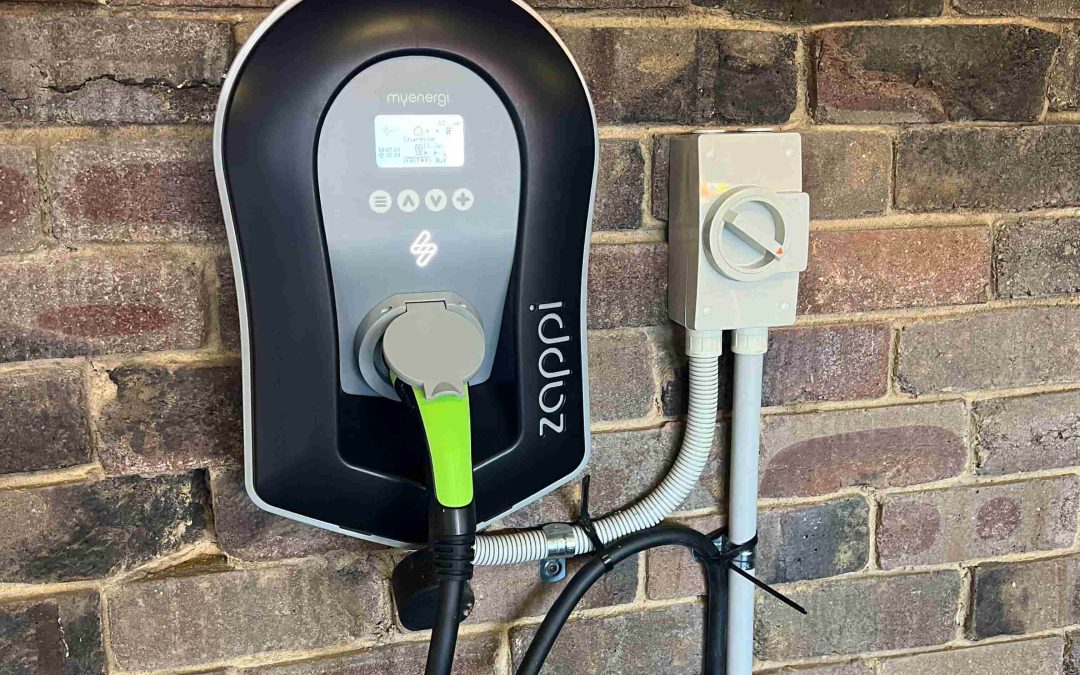
AC EV Charging for Sydney Apartments: Level 2 Infrastructure for Strata Buildings
AC EV charging, also referred to as Level 2 charging, gives apartment residents a dedicated charger at their allocated parking space, typically delivering 7kW to 22kW of charging speed.
For buildings where residents park overnight and want charging at their own bay, AC per-bay charging is usually the most practical and cost-effective solution.
It’s not the right choice for every building. For shared bays or high-turnover parking, DC fast charging may be more appropriate. For buildings with very limited electrical capacity and early-stage EV demand, starting with a Level 1 backbone first may be the better approach.
The right decision depends on how your building’s car park is actually used.
AC vs DC: Which Is Right for Your Building?
| AC (Level 2) Per-Bay | DC Fast Charging | |
|---|---|---|
| Typical power | 7–22kW | 25–180kW+ |
| Best for | Overnight resident charging | Shared/high-turnover charging |
| Charger location | Each resident’s own bay | Shared bays (visitor, common-use) |
| Billing | Per-resident sub-metering | Pay-per-session or RFID |
| Infrastructure cost per charger | Generally lower | Generally higher |
| Best suited to | Long overnight parking | Short stays, multiple users per day |
AC charging is the right starting point for most Sydney apartment buildings where residents park overnight at their own bay and want charging available when they wake up.
DC charging makes more sense where the same bay needs to serve multiple users throughout the day, such as visitor parking or mixed-use developments.
What Does AC (Level 2) Infrastructure Include?
A per-bay AC EV charging installation for a Sydney strata building typically includes:
- A dedicated EV charging backbone running throughout the car park, supplying individual charging bays
- Distribution boards or EV switchboards sized to supply all nominated bays with headroom for future additions
- Dedicated AC EV chargers installed at nominated parking spaces, typically 7kW single-phase or 11kW to 22kW three-phase depending on the building’s electrical supply and each resident’s vehicle
- Load management systems to allow multiple vehicles to charge simultaneously within the building’s available electrical capacity
- Energy metering and billing solutions so each resident is charged accurately for their own electricity use
- Communications infrastructure for remote monitoring and management
- Cable trays, conduits, fire-stopping, testing, commissioning and compliance documentation
How Fast Does AC Charging Work?
Charging speed depends on two things: the charger’s output and the vehicle’s onboard AC charger.
Most EVs sold in Australia accept up to 7kW on single-phase power. At 7kW, a typical EV gains 40 to 50 kilometres of range per hour of charging. For a resident driving 40 to 60 kilometres per day, a 7kW charger fully recharges most EVs overnight in 6 to 10 hours.
Some vehicles, including certain BYD models, the Kia EV6, Mercedes EQS and Polestar 2, can accept 11kW on three-phase. Very few residential-use vehicles can use the full 22kW output that three-phase chargers can deliver.
When designing an installation, we assess the actual vehicles your residents drive and recommend the right charger output for real demand rather than theoretical maximum speeds most residents will never use.
Load Management: How Multiple Chargers Share Capacity
The most common concern from strata committees is whether the building’s electrical capacity can handle multiple residents charging at the same time.
The short answer: rarely without load management, almost always with it.
A load management system monitors the building’s live electrical load and dynamically distributes available capacity across all connected chargers. If 20 residents are plugged in but the building can only support the equivalent of 10 chargers at full speed simultaneously, the system reduces each charger’s output proportionally so all 20 residents still charge, just slightly slower than maximum.
Because most residents charge overnight and only need their vehicle full by morning, minor reductions in charging speed during peak periods don’t affect their practical experience.
Load management means the building’s protection equipment is never tripped and the OC is never exposed to the cost of mains supply upgrades to accommodate worst-case simultaneous demand.
How Does Billing Work for Apartment EV Charging?
Getting billing right is one of the most important parts of a strata AC charging installation.
Without individual metering, EV charging electricity costs fall on the strata levy. This means all lot owners subsidise the charging costs of a minority of residents. It is a reliable source of committee disputes.
We install sub-metering at each charging bay so every resident’s electricity consumption is recorded accurately. Billing can be handled through the building manager using automated monthly reports, or through a resident-facing app where each driver sees their own usage and is billed directly.
We configure the billing system to match your building’s preference before handover. Residents pay only for what they use. The cost does not appear on the strata levy.
When Is AC Per-Bay Charging the Right Choice?
AC per-bay charging suits most Sydney apartment buildings where:
- Residents park at their own allocated bay overnight
- EV ownership among residents is meaningful and growing
- Residents want dedicated charging at their own space rather than shared bays
- The building’s electrical capacity can support multiple chargers with load management
- Individual billing per resident is important to the OC
When Is AC Per-Bay Charging Not the Right Choice?
AC per-bay charging is less suitable when:
- Bays are shared or turned over multiple times during the day
- The building’s electrical capacity is so constrained that even a small number of AC chargers requires a significant mains upgrade
- The primary charging need is visitor parking or common-use bays where faster turnover is required
- Current EV demand is very low and a Level 1 backbone first is the more appropriate staged investment
In these cases, DC fast charging for shared bays, or a Level 1 backbone first with per-bay connections added progressively, may be a better fit.
Can Existing Level 1 Infrastructure Be Upgraded to Per-Bay AC Charging?
Yes. If your building already has a Level 1 backbone in place, adding per-bay AC chargers is a straightforward connection to the existing infrastructure. The backbone, distribution boards and metering do not need to be replaced. The upgrade is connecting chargers and updating the load management configuration.
This is why Level 1 infrastructure is often the right starting point for buildings with early-stage EV demand: the backbone investment is not wasted when demand grows and per-bay chargers are added later.
What Does AC EV Charging Cost for a Strata Building?
Cost depends on the number of bays, the building’s electrical infrastructure and the complexity of the installation.
Factors that affect the total project cost include:
- Number of charging bays
- Charger model and output (7kW, 11kW or 22kW)
- Existing electrical capacity and switchboard condition
- Cable run distance from the main switchboard
- Load management system requirements
- Metering and billing infrastructure
- Cable containment, conduit and civil works
- Fire-stopping, commissioning and compliance documentation
An accurate quote requires a site assessment. We provide a fixed-price proposal following the assessment so your owners corporation has a confirmed figure before the approval vote.
AC EV Charging in Sydney Apartment Buildings
Sydney apartment buildings vary significantly in their electrical infrastructure, and this directly affects how an AC charging project is scoped and costed.
Newer buildings, particularly those constructed in the last 10 to 15 years across suburbs like Zetland, Alexandria, Green Square and Mascot, often have modern three-phase switchboards with documented spare capacity. In these buildings, AC per-bay installations can proceed relatively straightforwardly once the OC has approved the project.
Older buildings, particularly those built before the 1990s in the Inner West, Eastern Suburbs and CBD fringe, frequently have older switchboards and car park distribution boards with limited spare capacity. In these cases, load management becomes essential and the infrastructure scope needs to account for distribution board upgrades alongside the charging backbone.
Underground car parks with long cable routes from the main switchboard add to both infrastructure cost and electrical complexity. These factors are identified and costed in the feasibility study before any commitment is made.
How Does the Installation Process Work?
- Feasibility and site assessment. We assess your building’s electrical infrastructure, car park layout and resident EV demand. For most Sydney buildings, this takes 3 to 4 weeks from site access being confirmed.
- Fixed-price proposal. We provide a proposal covering the full AC installation scope: backbone, chargers, load management, metering and compliance documentation.
- Strata committee or OC approval. Works on common property require a committee or general meeting resolution. We can attend your AGM to present the proposal and answer questions from lot owners.
- Installation. Our licensed electricians complete the backbone and per-bay charger installations with full cable management, conduit, load management configuration and metering setup.
- Commissioning and handover. All chargers and infrastructure are tested at load. Your building manager receives full documentation covering equipment operation, maintenance requirements and warranty terms. Billing is configured before handover.
Planning AC EV Charging for Your Sydney Apartment Building?
Sydney EV Chargers installs AC (Level 2) EV charging infrastructure for strata buildings, apartment complexes and managed car parks across Sydney.
We can assess your building’s:
- Electrical capacity and load management requirements
- Car park layout and cable routing
- Charger output requirements for your residents’ vehicles
- Metering and billing approach
- Staged rollout options if not all bays are to be connected at once
- Compatibility with any existing Level 1 backbone infrastructure
Call 1300 905 641 or contact Sydney EV Chargers to arrange a strata EV charging assessment.
For most Sydney apartment residents who park overnight, AC charging is all they need. The question is designing the system so it works for the building, not just the charger.
Further Reading
- EV Charging for Strata Buildings Sydney — our full strata EV charging service page
- EV Charging Feasibility Study for Strata Buildings
- DC Fast Charging for Strata Buildings